
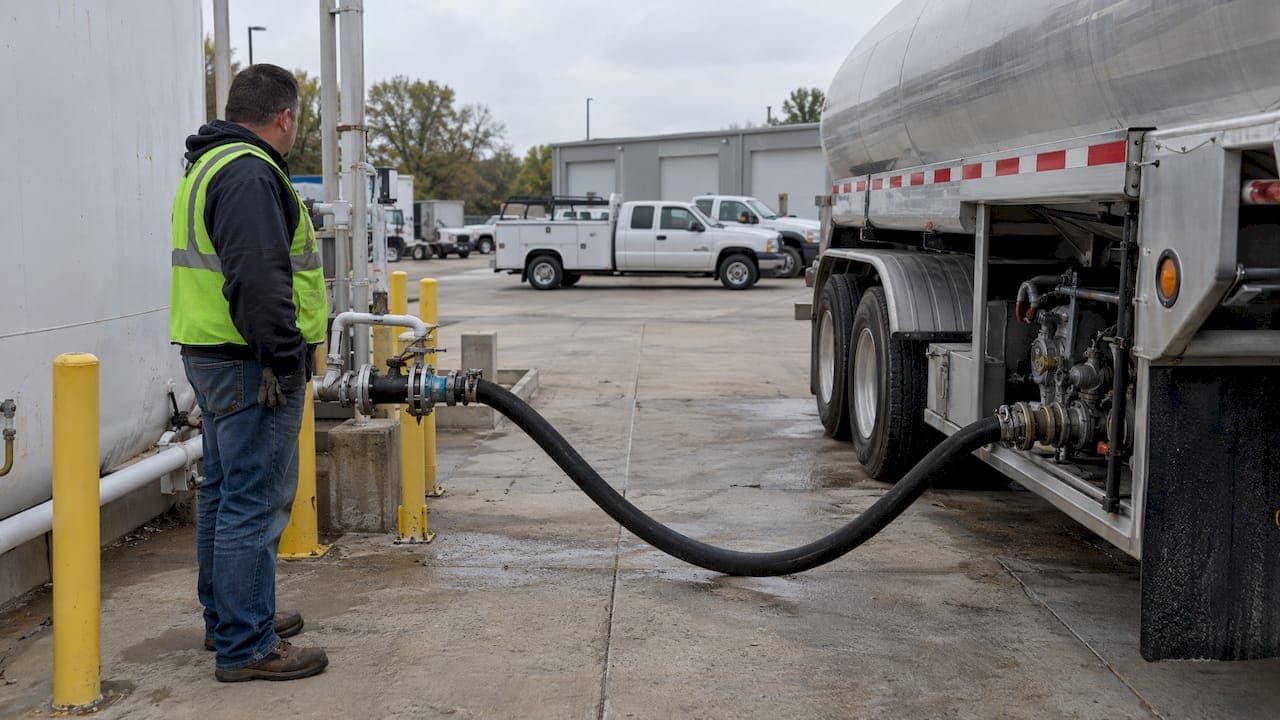
Renewable diesel is a hydrocarbon drop-in fuel that runs at 100% concentration, while biodiesel (FAME) is oxygenated and usually limited to blends of B20 or lower. Choose renewable diesel for direct replacement and simpler logistics, and biodiesel where blending economics or lubricity matter. Lifecycle emissions depend on feedstock, so ask for carbon intensity data on every batch.
TL;DR:
- A 2022 study found waste feedstocks cut lifecycle GHG emissions 79% to 86%, versus 40% to 69% for oilseed crops.
- Request batch specific carbon intensity, feedstock origin, and chain of custody; without feedstock documentation, do not make an emissions or ESG claim.
- For biodiesel stored over months, rotate fuel, manage water, and test for microbial growth; renewable diesel stores like conventional diesel.
- Ask suppliers for cloud point data matched to your coldest operating month, because feedstock determines cold flow for both fuels.
- Hydrotreating renewable diesel requires more hydrogen than petroleum diesel desulfurization, adding production cost and emissions; refinery capacity can also constrain regional supply.
Table of Contents
- How do biodiesel and renewable diesel compare side by side?
- How is each fuel produced, and why does it matter?
- Which fuel properties and standards affect performance?
- What do emissions and lifecycle studies show?
- What are the compatibility, storage and cold-weather rules?
- Where does each fuel fit best?
- What drives price and availability?
- What should a buyer prioritize?
- How we help you buy fuel with confidence
- FAQ
- Sources
How do biodiesel and renewable diesel compare side by side?
Start with the differences that change how you buy, store and burn the fuel.
- Drop-in capability: Renewable diesel can be used at R100 without engine modifications. OEM guidance typically caps biodiesel at 20% or less, according to the Alternative Fuels Data Center.
- Chemistry: Biodiesel is a fatty acid methyl ester that contains oxygen. Renewable diesel is a paraffinic hydrocarbon chemically similar to petroleum diesel, as the Biodiesel Handling and Use Guide explains. Biodiesel’s oxygenated structure is associated with lower oxidative stability and a tendency to attract water.
- Storage and cold flow: Biodiesel is prone to water uptake and microbial growth during long storage. Renewable diesel is a paraffinic hydrocarbon similar to petroleum diesel and can move through existing petroleum pipelines.
- Standards: Renewable diesel can meet ASTM D975 and run as R100. Biodiesel follows ASTM D6751 or EN 14214 and faces blend limits, and CARB has noted it can raise NOx, per its renewable diesel fact sheet.
- Warranty: Check your engine maker's stated blend limit before you sign a supply agreement.
Confusing the two is a common cause of operational failures, because biodiesel's oxygenated structure changes compatibility and storage requirements.
How is each fuel produced, and why does it matter?
Biodiesel is made by transesterification. Fats or oils are converted into FAME through transesterification. Plants are often smaller, dedicated facilities.
Renewable diesel is made by hydrotreating, also called hydroprocessing. Hydrogen, heat, pressure and catalysts strip oxygen from the feedstock and yield paraffinic hydrocarbons. The EIA notes that this route uses hydrotreating rather than esterification and needs more hydrogen than desulfurizing petroleum diesel. Because the process often happens in petroleum refineries, it accepts a wider range of lower-quality feedstocks.
What this means for buyers:
- Feedstock flexibility favors hydrotreating, which can widen supply.
- Hydrogen intensity adds production emissions and cost to renewable diesel.
- Transesterification is simpler and smaller in scale, which suits regional supply.
- Feedstock choice, not process alone, drives the final carbon intensity.
Pro Tip: Ask each supplier which process and which feedstock produced the batch you are buying, then request that in writing.
Which fuel properties and standards affect performance?
The Department of Energy workshop data puts the key property gaps side by side.
Energy density is lower for biodiesel than for petroleum diesel, while renewable diesel is similar or slightly lower. Fuel economy can vary with the fuel and operating conditions. Cloud point and oxidative stability vary by feedstock for both fuels. Monitor filters when transitioning fuels and adjust maintenance based on observed conditions.

Renewable diesel has high cetane and very low sulfur, and its hydrocarbon composition is similar to petroleum diesel.
What do emissions and lifecycle studies show?
Both fuels cut particulate matter and sulfur compared with petroleum diesel. Tailpipe CO2 differences can be small and feedstock-driven, and SCR and catalyst systems change what you observe at the tailpipe.
- Biodiesel and NOx: Some engines show higher NOx on biodiesel, a concern behind CARB's restrictions.
- Renewable diesel: Tailpipe emissions depend on the fuel, feedstock, and emissions-control technology.
- Production stage: The conversion step is often the biggest source of production-stage GHGs for both fuels.
- Batch variation: Two loads of the same fuel type can carry very different carbon intensity.
- Policy: Program requirements and documentation can affect how buyers assess a load’s carbon attributes.
A 2022 lifecycle study found 79% to 86% lower GHG emissions from waste feedstocks like tallow or used cooking oil, against roughly 40% to 69% for oilseed crops.
Treat the label as a starting point. The IEA advises evaluating lifecycle carbon intensity of the specific batch rather than generalized labels. Our rule for buyers: no feedstock documentation, no ESG claim.
What are the compatibility, storage and cold-weather rules?
Work through this checklist before the first delivery.
- Confirm the blend cap. Read your OEM guidance. Caps exist because of oxidative stability and NOx concerns, and B20 or lower is common.
- Set up storage. Biodiesel needs fuel rotation, tight water management and appropriate additives, since FAME attracts water and microbial growth in long-term storage. Renewable diesel stores like conventional diesel.
- Plan for cold weather. Feedstock sets cloud point, so ask for cold-flow data matched to your coldest operating month.
- Test on receipt. Pull a sample, keep the certificate of analysis, and compare it with the spec you ordered.
- Watch filters. Change elements early after switching, then settle on a cadence based on your own results.
Pro Tip: Include water checks in your biodiesel storage monitoring, and follow your supplier’s sampling guidance.
Where does each fuel fit best?
- Renewable diesel: Mixed fleets, contracts that call for R100 or R99, and any operation where drop-in behavior and existing infrastructure matter.
- Biodiesel blends: Sites with blending equipment, engines that benefit from added lubricity, and markets where feedstock economics favor FAME.
- Backup generators and seasonal storage: Fuel can sit for months, which stresses biodiesel's stability. Renewable diesel is the safer fit, and any biodiesel in the tank needs a testing and turnover plan.
- Off-road equipment: Some regulations, including CARB's, point toward renewable diesel, so check local rules.
What drives price and availability?
Price follows feedstock competition among soybean oil, used cooking oil and yellow grease, plus policy credits such as LCFS and RINs. Demand concentrates in certain regions, which can tighten supply and widen basis differences.
Ask every supplier for:
- Batch-level carbon intensity data.
- Feedstock origin and chain of custody.
- Certificates of analysis for each delivery.
- Statements on delivery and storage compatibility.
Then protect supply. Diversify suppliers, contract minimum volumes, and require verified counterparty screening. A cheap load with thin paperwork can cost you more than it saves.
What should a buyer prioritize?
Put operational fit first. A fuel that your engines and tanks cannot handle is not cheap at any price. Verified carbon intensity comes second, written into the contract at batch level with feedstock traceability. Cost and logistics follow. Spread volume across multiple suppliers and add clauses covering feedstock and regional shocks. Most of the biodiesel vs renewable diesel debate resolves once you rank requirements in this order.
— Destin
How we help you buy fuel with confidence
We source and document bulk fuel for commercial and government buyers. Our Fuel Oil & Lubricants Procurement service pairs live market pricing with verified counterparties, compliance-ready paperwork, logistics coordination and one point of contact. Tell us your volumes and fuel specification, and we will build a sourcing plan around them. Visit our procurement page to start.

FAQ
What are the disadvantages of renewable diesel?
Renewable diesel needs hydrogen and heavier processing, so production can cost more and depend on refinery capacity. Supply is also concentrated in certain regions. Its emissions benefit depends on feedstock, so verify carbon intensity for each batch.
Can you mix renewable diesel with regular diesel?
Yes. Renewable diesel is a drop-in fuel that can be blended with petroleum diesel or used at 100% concentration without engine modifications. It can also move through existing petroleum pipelines.
What are the downsides of using biodiesel instead of diesel?
Biodiesel is oxygenated, so it oxidizes faster, attracts water and can support microbial growth in storage. Engine makers typically cap blends at B20 or lower, and CARB notes it can raise NOx in some engines.
Is renewable diesel better than biodiesel?
It depends on your operation. Renewable diesel is simpler to store and use because it behaves like petroleum diesel. Biodiesel can still make sense where blending infrastructure exists and feedstock economics favor it.
Sources
- Alternative Fuels Data Center: Renewable Diesel Cycle Greenhouse Gas Emissions of Biodiesel and Renewable Diesel Production in the United States](https://pmc.ncbi.nlm.nih.gov/articles/PMC9228054/)
- Biodiesel Handling and Use Guide: Sixth Edition
- Fact Sheet: Renewable Diesel Fuel Requirements | California Air Resources Board
- Biodiesel, renewable diesel, and other biofuels